
Tropical Fruit Smoothie with Milk – Best 5-Minute Blender Recipe

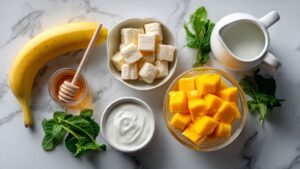
This tropical fruit smoothie with milk is creamy, naturally sweet, and packed with real mango, pineapple, and banana. It takes just 5 minutes in the blender — no cooking, no prep, no fuss. Perfect for busy mornings, post-workout refueling, or any time you need something cold, vibrant, and genuinely nourishing.

This post may contain affiliate links. Please read my disclosure policy.

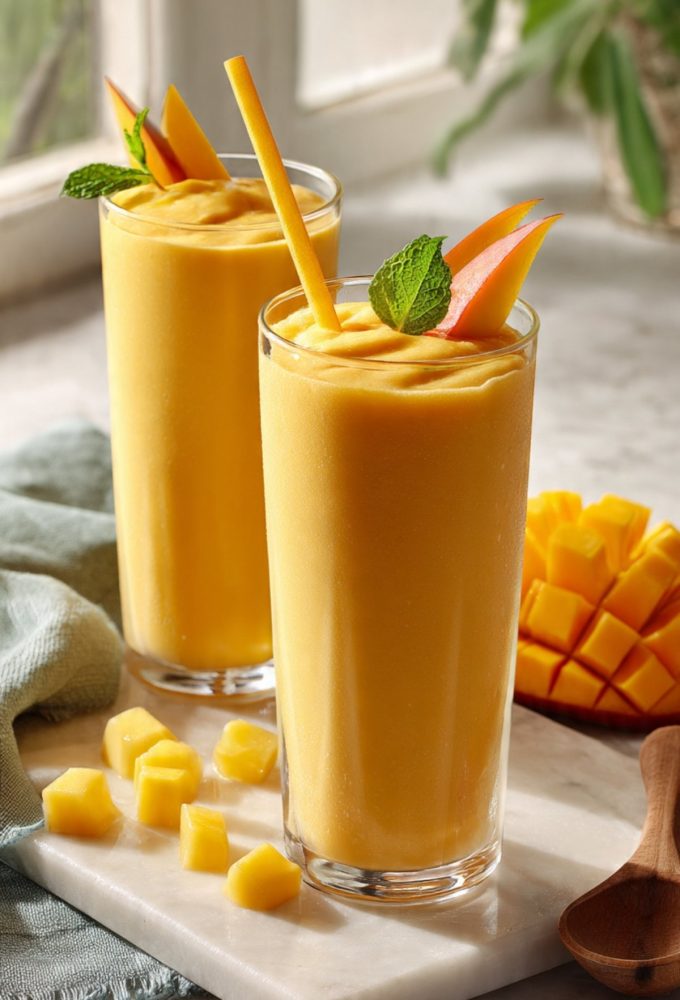
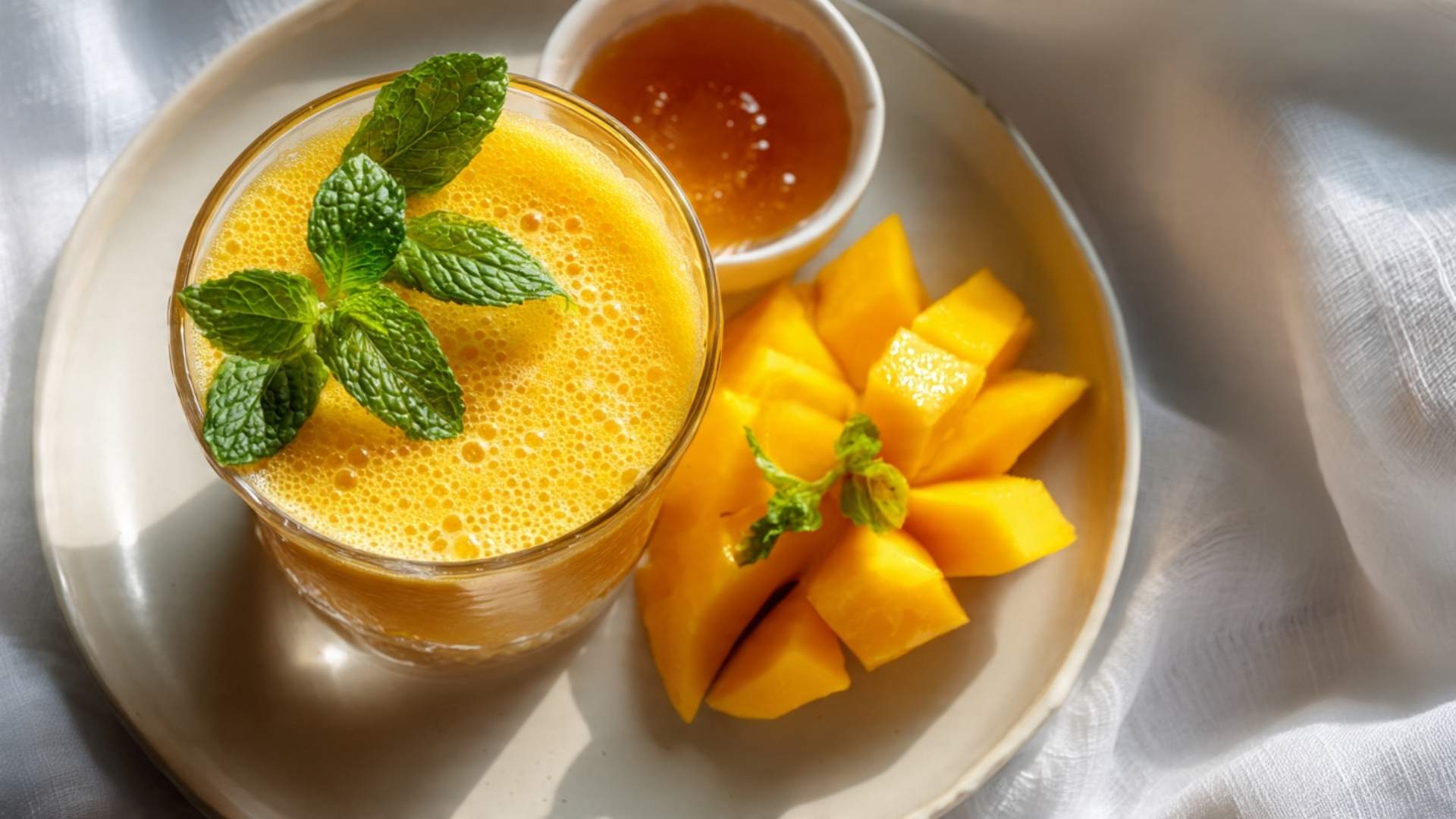
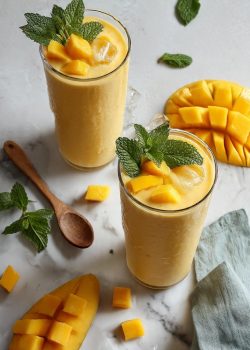
Two tall glasses of tropical fruit smoothie with milk garnished with fresh mango and mint on white marble — best 5-minute blender recipe

This tropical fruit smoothie with milk is the kind of drink that makes a regular Tuesday morning feel like a vacation. Frozen mango, pineapple, and banana hit cold milk in the blender and come out the other side as a creamy, vivid, golden-orange glass of pure tropical energy — in five minutes flat.


No soaking, no chopping, no complicated ratios. Just real fruit, cold milk, and thirty seconds of blending between you and the most cheerful glass in your kitchen.

Why You'll Love This Recipe


  • Ready in exactly 5 minutes — no cooking, no prep beyond measuring, no excuses
  • Creamy and thick without ice cream — frozen fruit does all the work naturally
  • Genuinely nutritious — mango delivers vitamins C and A; banana brings potassium and slow-release energy; milk adds calcium and protein
  • Works for everyone — swap to oat milk or coconut milk and it’s instantly dairy-free and vegan
  • Kid-approved without negotiation — the natural sweetness of ripe frozen mango means kids ask for it; you don’t have to sell it
  • Budget-friendly year-round — frozen tropical fruit costs a fraction of fresh and actually gives a silkier, colder result

Ready to make the most refreshing glass in your kitchen? Let me show you exactly how!

Print
clock clock iconcutlery cutlery iconflag flag iconfolder folder iconinstagram instagram iconpinterest pinterest iconfacebook facebook iconprint print iconsquares squares iconheart heart iconheart solid heart solid icon
crispy-inside-out-rice-paper-rolls

Crispy Inside-Out Rice Paper Rolls (Pan-Fried & Golden)


5 Stars 4 Stars 3 Stars 2 Stars 1 Star

No reviews

Description

Crispy Inside-Out Rice Paper Rolls (Pan-Fried & Golden)


Ingredients

Scale

crispy-inside-out-rice-paper-rolls

For the Rolls

  • 8 round rice paper sheets (22cm / 8.5-inch diameter) — look for Vietnamese bánh tráng brand
  • 4 tablespoons (40g) white sesame seeds, divided (1/2 tablespoon per roll)
  • 2 tablespoons (20g) black sesame seeds, divided — for visual contrast (optional but beautiful)
  • 60g (2 oz) thin rice vermicelli noodles, cooked and cooled
  • 1 cup (90g) purple cabbage, very finely shredded
  • 1 medium carrot (about 80g), julienned or grated
  • 1 small cucumber (about 120g), seeded and julienned
  • 1 ripe avocado, thinly sliced
  • 1 small handful fresh mint leaves (about 15-20 leaves), larger leaves torn
  • 1 small handful fresh cilantro (about 15-20 stems), roughly picked
  • 2-3 tablespoons (30-45ml) neutral oil (avocado oil or light vegetable oil), for pan-frying

Note: For added protein, add 100g of pan-fried extra-firm tofu, cooked shrimp, or shredded poached chicken to the filling.

For the Peanut Dipping Sauce

  • 3 tablespoons (48g) natural smooth peanut butter
  • 2 tablespoons (30ml) hoisin sauce — use gluten-free hoisin if needed
  • 1 tablespoon (15ml) soy sauce (or tamari for gluten-free)
  • 1 tablespoon (15ml) fresh lime juice (about 1/2 lime)
  • 1 teaspoon (5ml) toasted sesame oil
  • 1 teaspoon (5g) grated fresh ginger
  • 1-3 tablespoons (15-45ml) warm water, to thin to desired consistency
  • 1 small red chili, thinly sliced, to serve (optional)

For Garnish (Serving)

  • 1 tablespoon sesame seeds, extra, lightly toasted
  • Fresh mint sprigs and lime wedges
  • Thinly sliced scallions
Instacart Get Recipe Ingredients

Instructions

Step 1: Make the Dipping Sauce

In a small bowl, whisk together the peanut butter, hoisin sauce, soy sauce (or tamari), fresh lime juice, sesame oil, and grated ginger until smooth and combined. It’ll look thick at first — add warm water one tablespoon at a time, whisking after each addition, until the sauce flows like a thin gravy and coats the back of a spoon. Taste it: it should be savory, slightly sweet, tangy from the lime, with a gentle roasted nuttiness. Adjust lime or hoisin to your preference, then set aside. The sauce thickens slightly as it sits, so make it first.

Step 2: Prep All Your Fillings

Before you touch a single sheet of rice paper, get every filling element ready and laid out within easy reach. Cook the rice vermicelli according to package directions (usually a 3-minute soak in boiling water), then drain, rinse under cold water to stop cooking, and toss with a few drops of sesame oil to prevent clumping. Julienne the cucumber (remove seeds first to prevent sogginess), carrot, and shred the purple cabbage as finely as possible — this is important for tight rolling. Slice the avocado thinly right before you need it. Pull your mint and cilantro leaves from their stems. Having everything ready in little prep bowls makes the rolling process calm and easy rather than chaotic.

Step 3: Set Up Your Rolling Station

Fill a large, shallow bowl (wider than your rice paper sheets) with warm water — not hot, just comfortably warm to the touch, around 38–40°C (100–104°F). Lay a clean damp kitchen towel or silicone rolling mat flat on your work surface. Scatter a half-tablespoon of mixed white and black sesame seeds evenly over a 20cm (8-inch) area of your damp towel — this is your rolling zone for the first roll. The sesame seeds will stick to the outside of the rice paper during rolling. Have all your filling bowls and the warm water right there. This is the setup step that makes everything flow smoothly.

Step 4: Soak and Place the Rice Paper

Submerge one rice paper sheet in the warm water and leave it for exactly 10–12 seconds. You want it pliable but not completely soft — it should still feel slightly firm in the center when you lift it out. If it’s fully floppy and soft before you even roll it, your water is too warm or you’ve soaked it too long. Lift it carefully and lay it flat directly over the sesame seeds you scattered on the damp towel. Press it gently with your fingertips so the seeds stick to the entire underside of the rice paper. You won’t see them from the top, but they’re there — and they’ll be the crispy golden crust once pan-fried.

Step 5: Add the Fillings

Working quickly (the rice paper will continue softening), arrange your fillings in a horizontal line across the lower third of the rice paper sheet — not the very bottom edge, but about 5cm (2 inches) up from the bottom. Keep the filling strip roughly 3–4cm (1.5 inches) wide and don’t overstuff: start with a small pinch of vermicelli, a few shreds of purple cabbage, a few carrot and cucumber sticks, two slices of avocado, and a few leaves each of mint and cilantro. The filling should feel like a generous pinch, not a fistful. Overstuffing is the number one roll-breaking mistake — keep it tighter than you think you need to.

Step 6: Roll Tight and Seal

To roll, fold the bottom edge of the rice paper up and over the filling, tucking it snugly underneath — like starting a burrito. Then fold in the left and right sides (like an envelope). Now roll forward firmly but gently, keeping the filling compact as you go. The rice paper is self-sealing — the dampness causes it to bond to itself as you roll. Once sealed, press the roll gently with your palm to set the shape. The sesame seeds are now coating the entire exterior of the roll. Don’t worry if a few seeds fall off — most will hold, and the pan-frying locks them in completely. Set the completed roll on a clean plate, seam-side down, and repeat with the remaining sheets.

Step 7: Pan-Fry Until Golden

Heat a large non-stick skillet over medium heat. Add 2 tablespoons of neutral oil and swirl to coat. When the oil is shimmering and a sesame seed dropped in sizzles immediately, you’re ready. Place 3–4 rolls in the pan, seam-side down first, leaving space between each one. Let them cook undisturbed for 1.5–2 minutes — you’ll see the sesame seeds turning a warm golden brown and the rice paper blistering slightly at the edges. Use a spatula or tongs to gently turn the rolls a quarter turn and repeat on each side (4 sides total), about 1–1.5 minutes per side. The finished roll should be deeply golden all around, with a faint crackling sound when tapped with a spoon. Drain on a paper towel for 30 seconds before plating.

Step 8: Slice, Plate & Serve

Instruction: Let the rolls rest for 1 minute before cutting — this sets the crust and prevents the filling from falling out. Using a sharp chef’s knife with a single confident downward press (no sawing), cut each roll in half diagonally. The cross-section should reveal a beautiful mosaic of purple, orange, green, and ivory fillings nested inside the golden, crackly shell. Arrange the halved rolls on a serving board or plate with the cut side facing up or slightly angled to show the filling. Add a small dipping bowl of the peanut sauce, scatter fresh mint sprigs and toasted sesame seeds, and tuck in lime wedges on the side.

Notes

Ingredient Tips & Substitutions

  • Rice paper hydration is everything. Slightly under-soak rather than over-soak. You want it pliable but not floppy — it finishes softening as you roll. Over-soaked paper tears and sticks to itself.
  • No avocado? Thinly sliced mango works beautifully and adds tropical sweetness. Softened cream cheese (non-vegan, but delicious) is another great option.
  • Peanut allergy? Swap the peanut butter in the dipping sauce for sunflower seed butter or tahini — the flavor shifts slightly but stays delicious.
  • Hoisin sauce substitution: Mix 1 tablespoon soy sauce + ½ teaspoon sugar + a tiny pinch of five-spice powder as an emergency swap.
  • Protein add-ins: Pan-fried extra-firm tofu (cubed and seasoned with soy + garlic), cooked tiger shrimp, or shredded rotisserie chicken all work in the filling without changing the technique.

Make-Ahead Instructions

  • Pre-roll but don’t fry: You can fill and roll up to 2 hours ahead. Store the raw rolls on a parchment-lined plate, covered loosely with a lightly damp paper towel, at room temperature. Don’t refrigerate raw rolls — the rice paper goes rubbery and sticks.
  • Dipping sauce: Makes 2–3 days ahead; store in an airtight jar in the fridge. Re-whisk with a splash of warm water before serving.

Storage & Reheating

  • Leftovers: Cooked crispy rolls are best eaten immediately. If you do have leftovers, store in a single layer in an airtight container in the fridge for up to 1 day.
  • Reheating: Re-crisp in a dry non-stick pan over medium heat for 2–3 minutes per side, or in an air fryer at 180°C (350°F) for 4–5 minutes. The microwave will make them soft and rubbery — avoid it.
  • Do not freeze assembled rolls — the rice paper becomes gummy and the vegetables lose all texture.

Technique Tips

  • Work in batches. Roll one or two at a time, set aside, then continue. Trying to manage four rolls at once while one is in the pan leads to chaos.
  • Oil temperature matters. Too low and the rolls steam instead of frying — the crust turns pale and chewy. You want a confident sizzle from the first second.
  • Gentle hands when turning. The rolls are fragile for the first 30 seconds in the pan. Once the bottom crust sets golden, the roll holds its own. Use a wide spatula to support the full length of the roll when turning.
  • Vegetable prep is non-negotiable. Fine, uniform cuts mean tight rolls that hold together. Chunky vegetables create lumpy rolls that burst in the pan.

Nutrition

  • Calories: 275
  • Fat: 6g
  • Carbohydrates: 48g
  • Protein: 8g

SERVING SUGGESTIONS


  • Pair alongside warm whole-grain toast spread with natural almond butter for a balanced, complete breakfast — the fat and protein anchor the fruit sugar and keep you satisfied until lunch
  • on a brunch spread — the two together cover every texture, from silky-cold to thick-and-chewy
  • Pour into smaller 6 oz glasses as an after-school snack — the bright golden-orange color is genuinely irresistible and beats every packaged juice box on nutrition without any argument
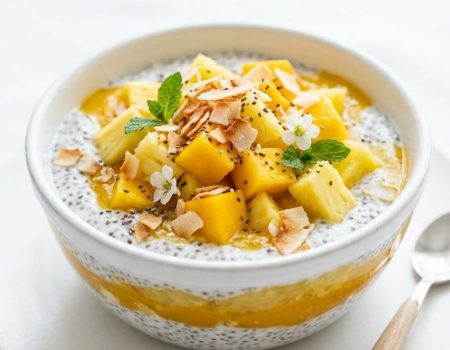
  • Set up a weekend brunch DIY smoothie bar: blend a double batch of the base and set out small bowls of toppings — granola, shredded coconut, chia seeds, fresh mango cubes — and let everyone build their own bowl or glass

Get Fresh Recipes from Spoonista

Got Questions? Here's What You're Asking (FAQ)

What milk works best in a tropical fruit smoothie with milk?

Whole dairy milk gives the richest, most naturally creamy result — it complements the tropical fruit without competing. Full-fat coconut milk is a spectacular dairy-free alternative that deepens the tropical character dramatically. Oat milk is a clean, neutral option. Avoid very low-fat or skimmed milks — they make the smoothie watery and flat-tasting.

Yes, but the texture will be thinner and less creamy. If using fresh fruit, add 4–6 ice cubes and reduce the milk by 3 tablespoons. Frozen fruit does the dual job of chilling and thickening simultaneously — it’s genuinely the core secret behind a great tropical fruit smoothie with milk, and it costs less than fresh tropical fruit year-round.

Blend it up to 12 hours ahead and store in a sealed mason jar in the fridge. Shake well before serving. For the best result, prep smoothie freezer packs instead (see Storage) — a fresh blend takes 5 minutes and the texture difference is worth it every time.

Genuinely yes. According to Healthline’s mango nutrition overview, mangoes are rich in vitamins C and A, folate, copper, and antioxidants that support immune function. Pineapple contributes bromelain, an enzyme that actively aids digestion. Banana delivers potassium and natural energy, while whole milk adds calcium and protein — making this a nourishing breakfast, not just a delicious one.


Use a fully frozen banana (freeze it the night before, peeled), reduce the milk by 3 tablespoons, and add 2–3 tablespoons of plain full-fat Greek yogurt or ¼ of a ripe avocado. If still thinner than you’d like, add a small handful of ice and blend 10 more seconds.

Absolutely — scale every ingredient exactly. Just make sure your blender jar is no more than two-thirds full when doubled; overfilling prevents proper emulsification. Blend in two batches if needed for the smoothest result.

Two tall glasses of tropical fruit smoothie with milk garnished with fresh mango and mint on white marble — best 5-minute blender recipe

Equipment Needed

Essential:

Optional but helpful:

Related Recipes

Everly Brooks spoonista food blog-vegan recipes

Nice To Meet You !

I’m Everly Brooks and I ♡ wholesome vegan food. Food blogger and recipe creator—Spoonista is my passion, sharing budget-friendly vegan eats with you all!

Made this recipe? Tag @spoonista on Instagram—we’d love to see it!

LEAVE A COMMENT

Everly Brooks spoonista food blog-vegan recipes

HI! I'M

Everly

Welcome to Spoonista, where I share wholesome, budget-friendly vegan & vegetarian recipes that make plant-based cooking easy and delicious for everyone.

Follow Us

Signup For Updates

Get our latest and most-loved recipes — totally free!

Popular Recipes